Critical Analysis
Technique and Style: Impressionism of Speed
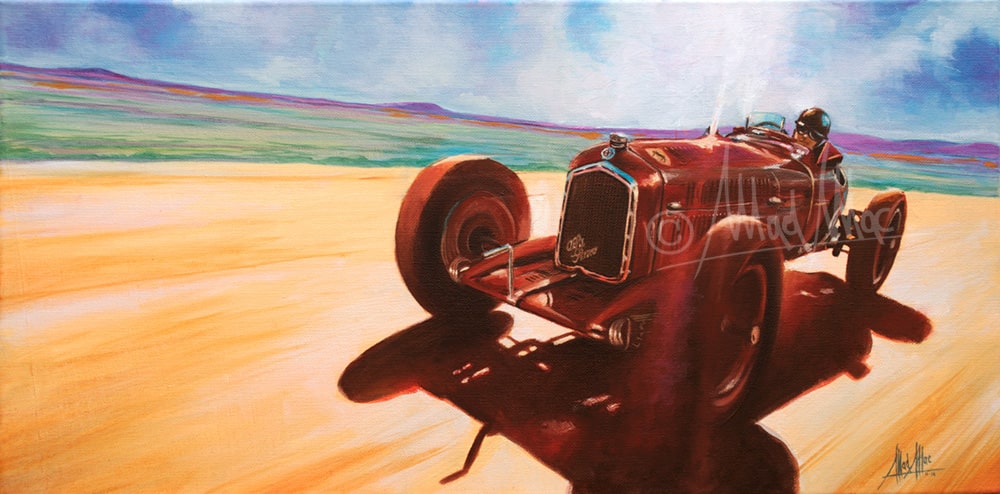
The work “Alfa Romeo P3” stands out for its bold and successful balance between figurative realism and a vibrant impressionist-modern interpretation.
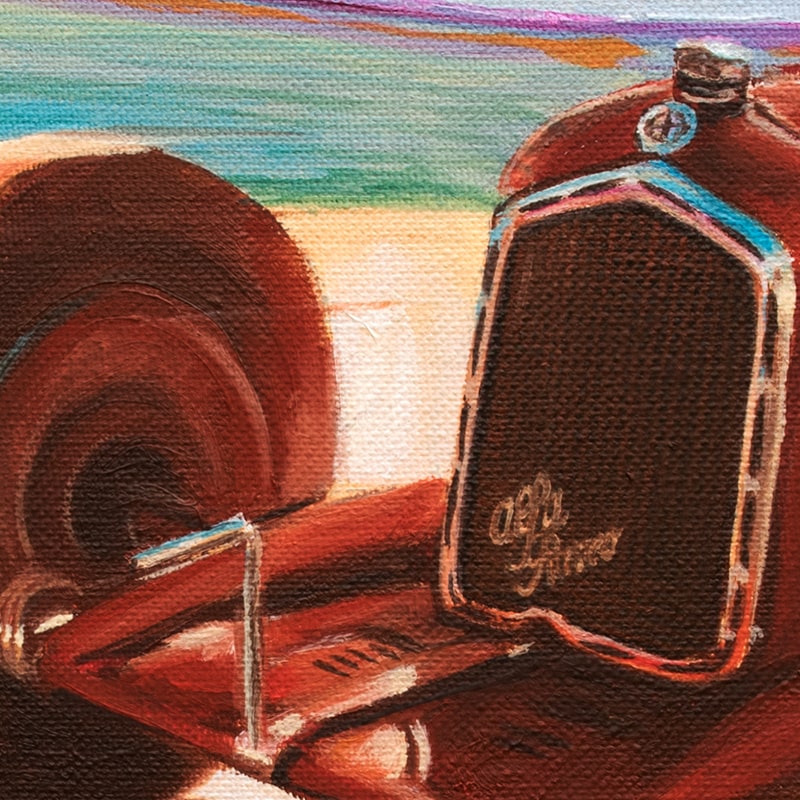
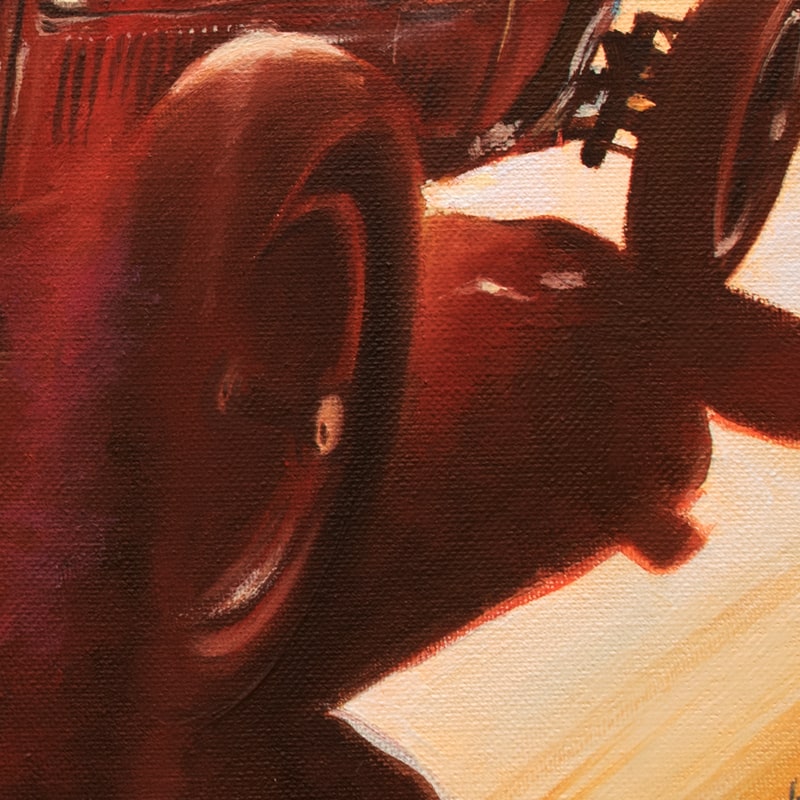
The artist uses the technique of oil on canvas, exploiting its rich texture to infuse energy and movement.
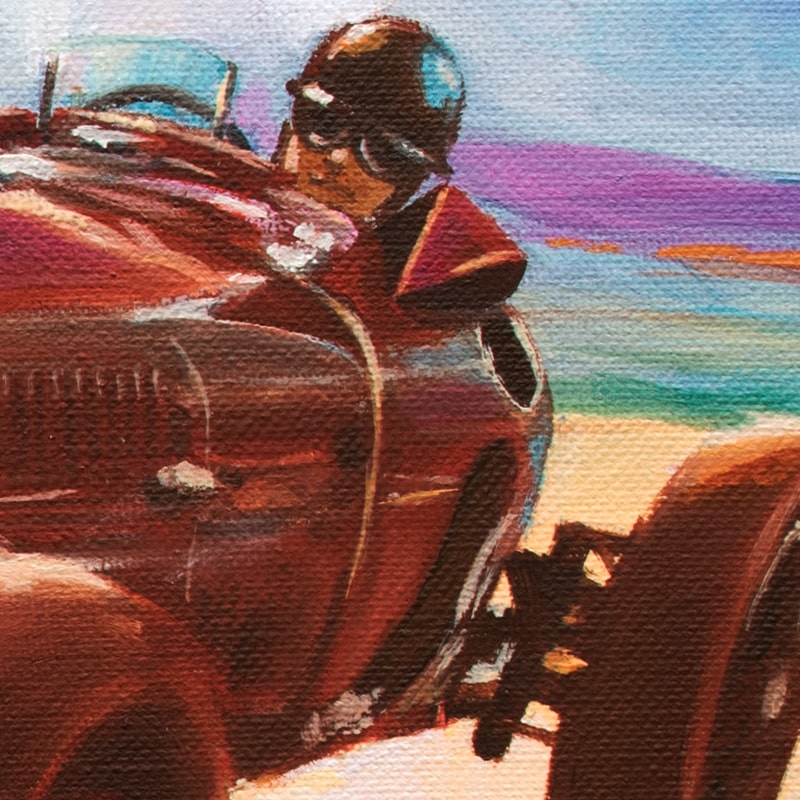
The technique is commendable in its synthesis: crucial elements, such as the profile of the car and the figure of the driver, maintain structural clarity, achieved not through meticulous hyperrealism, but through decisive, energetic brushstrokes that suggest detail without dwelling on it. This approach ensures that the focus remains on the action and atmosphere.
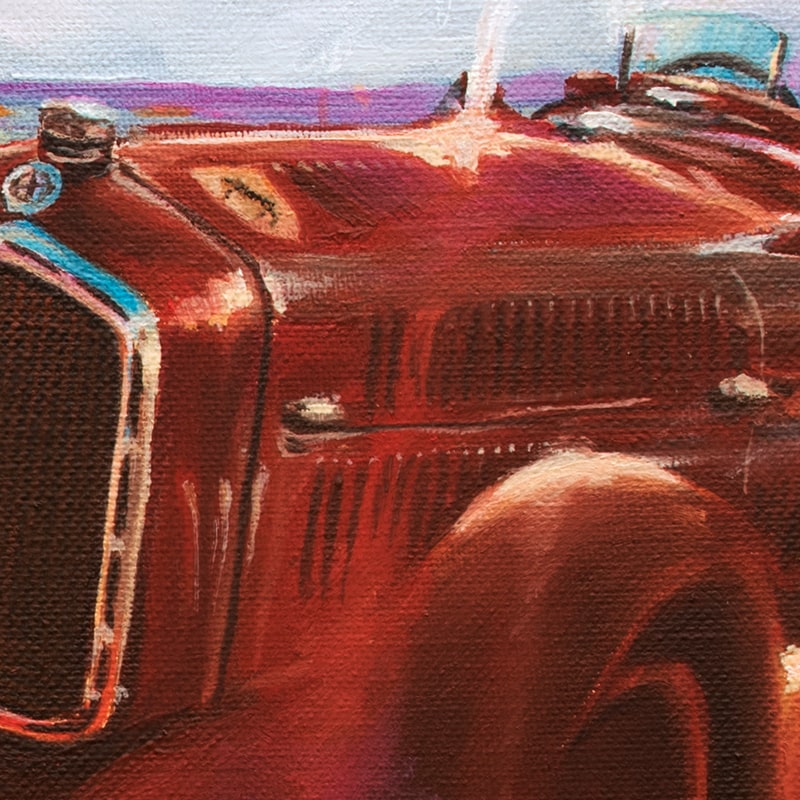
The skillful use of light striking the red bodywork and reflecting off the asphalt accentuates the volume and three-dimensionality of the car, making it stand out powerfully from the background.
Composition and Dynamism: The Frozen Moment
The composition masterfully captures the essence of speed. The extremely low, angled framing places the viewer almost at street level, amplifying the feeling of immediacy and power. The effect of movement is created mainly through the brushwork: the desert road or dirt track is rendered with broad diagonal stripes of ochre and orange, which blend the perspective plane and make the car “dart” off the canvas. The imposing, elongated shadow of the P3, rendered in dark, purplish tones, not only anchors the subject to the ground but also enhances its drama and mass in motion. The artist has managed to “freeze the action” in an adrenaline-filled moment, where kinetic energy and mechanical effort can be felt.
Message and Historical Resonance: The Myth of P3
Beyond its aesthetic appeal, the painting is an emotional tribute to one of the most iconic racing cars: the 1932 Alfa Romeo P3 Tipo B (P3). This car is not just a piece of machinery, but a symbol of a golden age, representing the pinnacle of Italian technology and engineering in the 1930s.
The concept expressed by the artist—energy, speed, technology, and courage—is perfectly embodied by the P3. This single-seater, under the management of Scuderia Ferrari, dominated European racing, leading legendary drivers such as Tazio Nuvolari and Achille Varzi to victory. Its presence immediately evokes the epic challenges of the Mille Miglia and the Targa Florio, where the driver's courage was as crucial as the reliability of the engine. The backlighting effect, with the warm sunlight reflecting off the bodywork and casting an elongated shadow, not only creates a dramatic atmosphere but also enhances the car's elegant and imposing silhouette. In this way, the painting becomes a sensory experience that brings to mind the roar of the inline 8-cylinder engine and the adrenaline rush of a Grand Prix race.
The work therefore resonates deeply with enthusiasts and collectors, offering not only a dynamic image but also a fragment of motoring history steeped in glory and nostalgia. It is a representation that celebrates the car not only as an object but as a cultural icon forged by speed and victory.